
Shortest Path vs MST
In graph theory, confusion often arises not from complexity, but from similarity. Shortest Path and Minimum Spanning Tree (MST) both deal with weighted graphs. Both aim to "minimize" something. Yet their intentions are fundamentally different.
Akshay Karande
Feb 26, 2026
The Core Question
Every algorithm exists to answer a precise question.
Shortest Path asks: What is the minimum cost required to go from one specific vertex to another?
Minimum Spanning Tree asks: What is the minimum total cost required to connect all vertices together?
One is concerned with a journey between two points. The other is concerned with building an entire network.
Shortest Path
Shortest Path algorithms focus on efficiency between specific nodes. They do not care about connecting every vertex — only about minimizing the cost from a source to a destination.
When you use Dijkstra’s algorithm, for example, you are computing the shortest routes from one source to all other vertices. But even then, the intention remains source-centric.
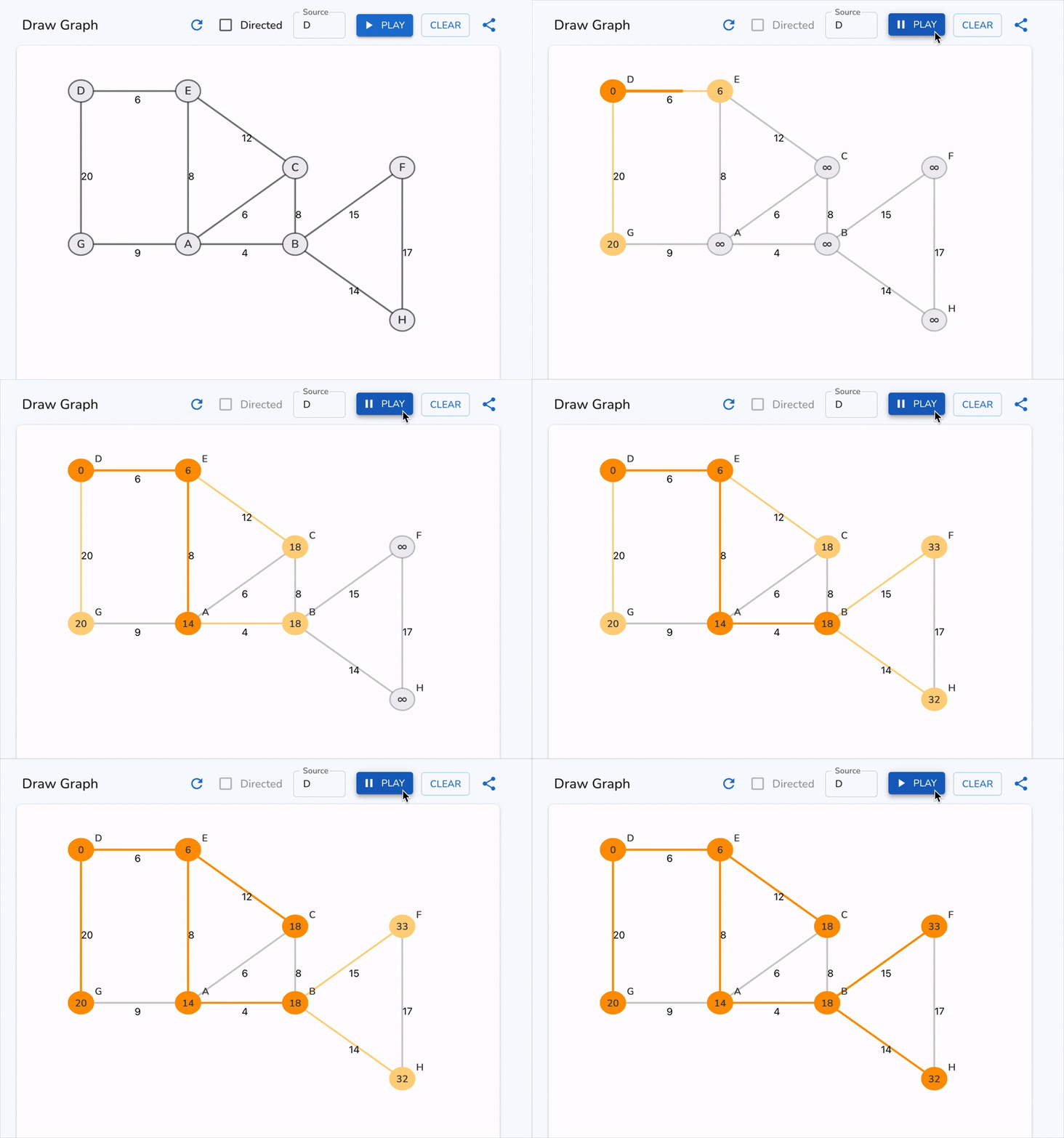
In real systems, this appears in routing, navigation, and network packet delivery. The goal is directional. There is always a starting point. Shortest Path solves: How do I get there efficiently?
Minimum Spanning Tree
MST algorithms, such as Prim’s or Kruskal’s, are not interested in any particular source or destination. They aim to connect all vertices with the minimum possible total edge weight, without forming cycles.
Prim’s algorithm requires a starting vertex to grow the tree, but the MST itself is not tied to any source.
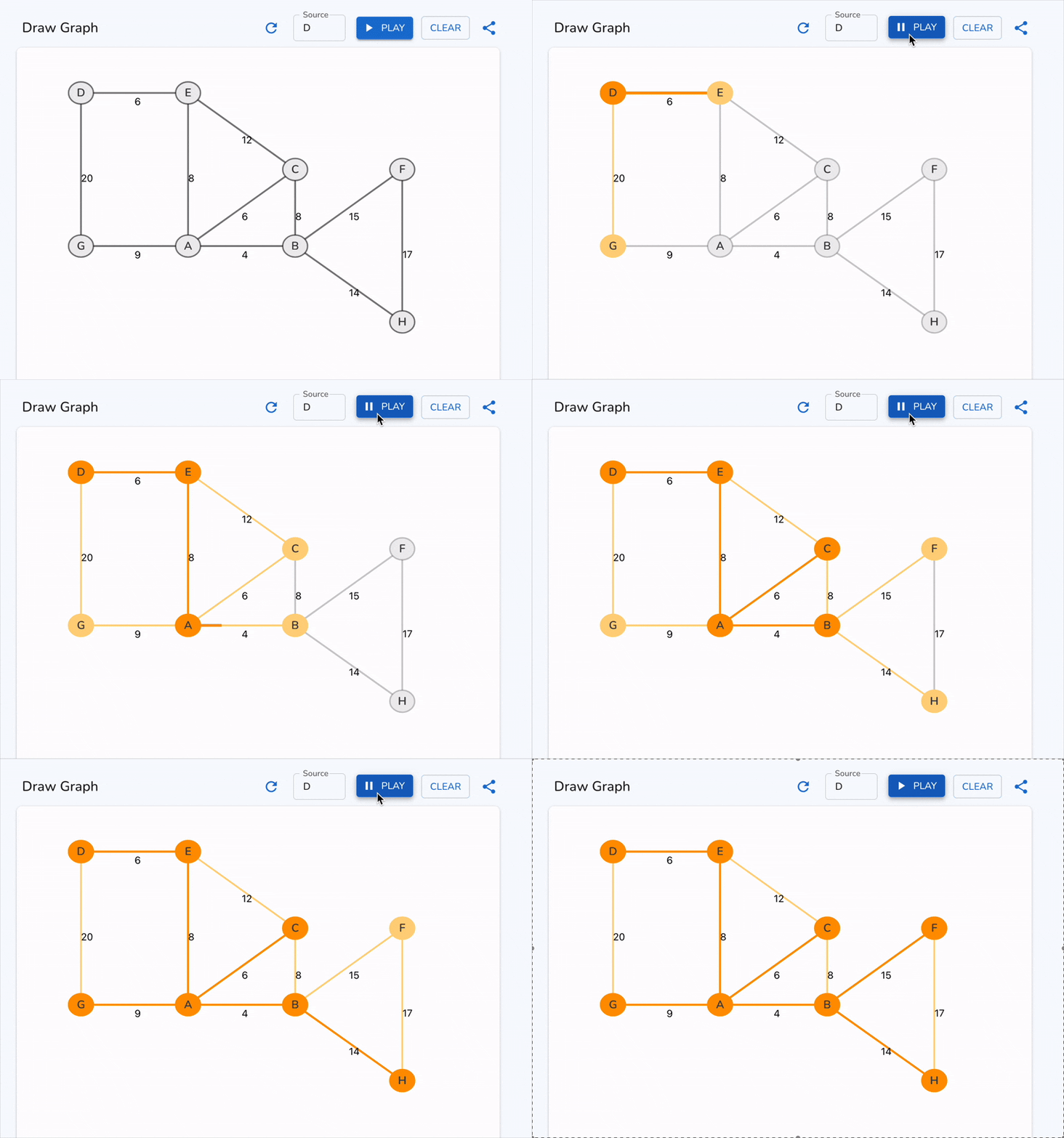
This is useful in infrastructure design: laying cables, building roads, or connecting systems where total construction cost must be minimized. MST solves: How do I connect everything efficiently?
Critical Difference
A shortest path tree minimizes distance from one source. An MST minimizes the total weight of all selected edges. These objectives do not guarantee the same structure. An edge that is optimal globally may not be part of the shortest route from a specific source.
Shortest Path:
- May produce different trees for different sources
- Focuses on path distance from one vertex
- Does not aim to minimize total graph weight
Minimum Spanning Tree:
- Single tree covering all vertices
- Minimizes total edge weight
- Independent of any source vertex
Practical Insight
If your system needs optimal routing from a central node — think Shortest Path. If your system needs cost-efficient infrastructure connecting everything — think Minimum Spanning Tree.
💬 Discussion
to join the discussion
Curious to Learn More?
Hand-picked resources to deepen your understanding


© 2025 See Algorithms. Code licensed under MIT, content under CC BY-NC 4.0