
AVL Tree vs Red-Black Tree
AVL Trees and Red-Black Trees both protect the Binary Search Tree from degeneration — but they do so with different temperaments.
The Problem They Solve
A Binary Search Tree is elegant when balanced. But if insertions happen in sorted order, it slowly collapses into a linked list. The structure still works, but its spirit is lost.
Both AVL and Red-Black Trees exist to preserve structure automatically. They reorganize themselves after insertions and deletions so that height remains controlled. The difference lies in how strictly they enforce balance.
Shared Mechanism
Both trees rely on rotations — small, local restructuring operations that preserve the BST invariant.
A rotation does not change the sorted order. It only rearranges parent-child relationships to restore balance. The difference is not in the mechanism, but in how often and how strictly it is invoked.
Strict Discipline
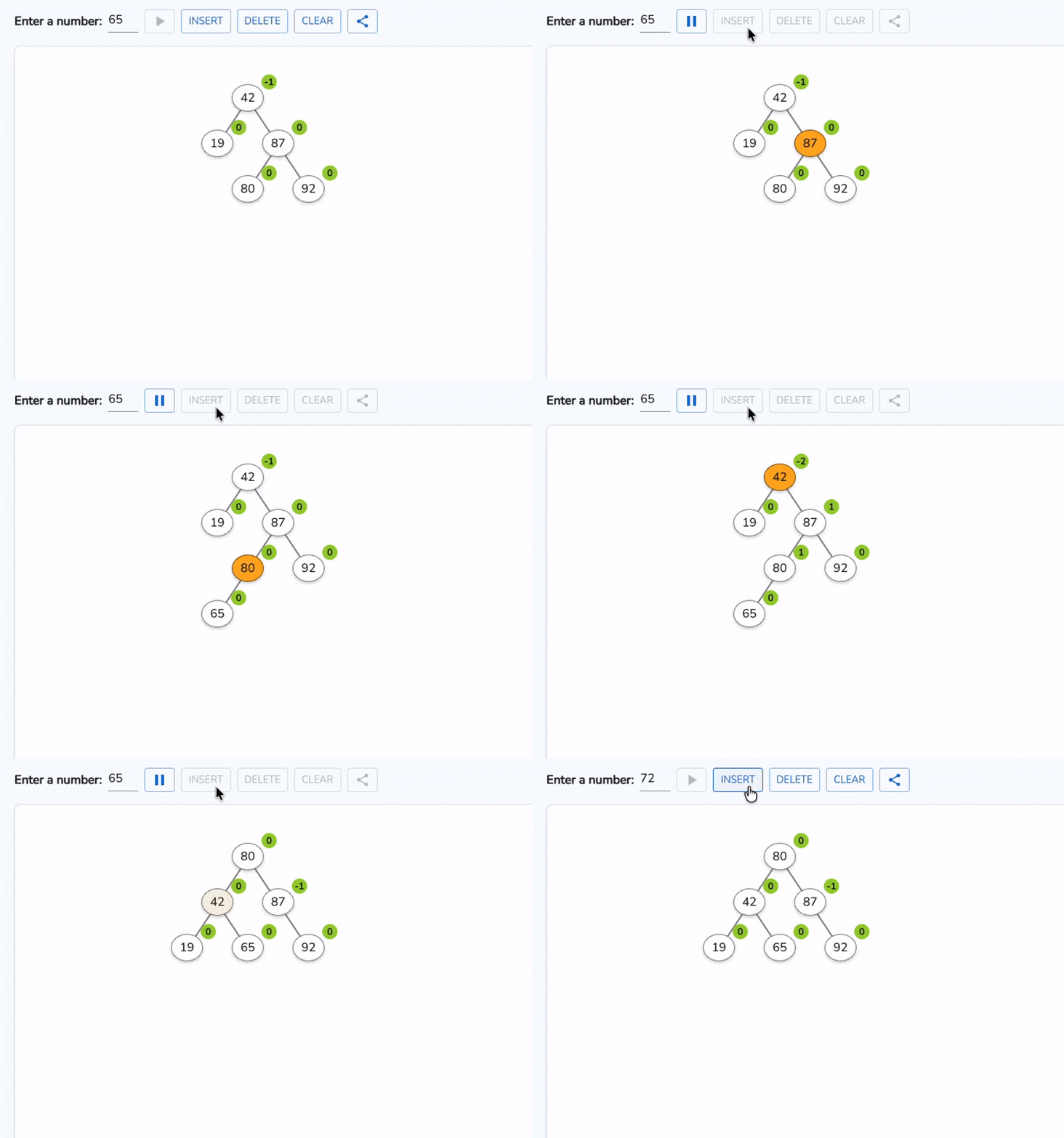
An AVL Tree maintains a simple rule: for every node, the height difference between its left and right subtree must not exceed one. This constraint is strict. After every insertion or deletion, the tree checks balance factors and performs rotations immediately if needed.
The result is a tightly balanced tree. Search operations feel predictably stable because the height is kept minimal. But discipline has a cost. Insertions and deletions may trigger multiple rotations. The tree is precise, but it works harder to remain so.
Controlled Flexibility
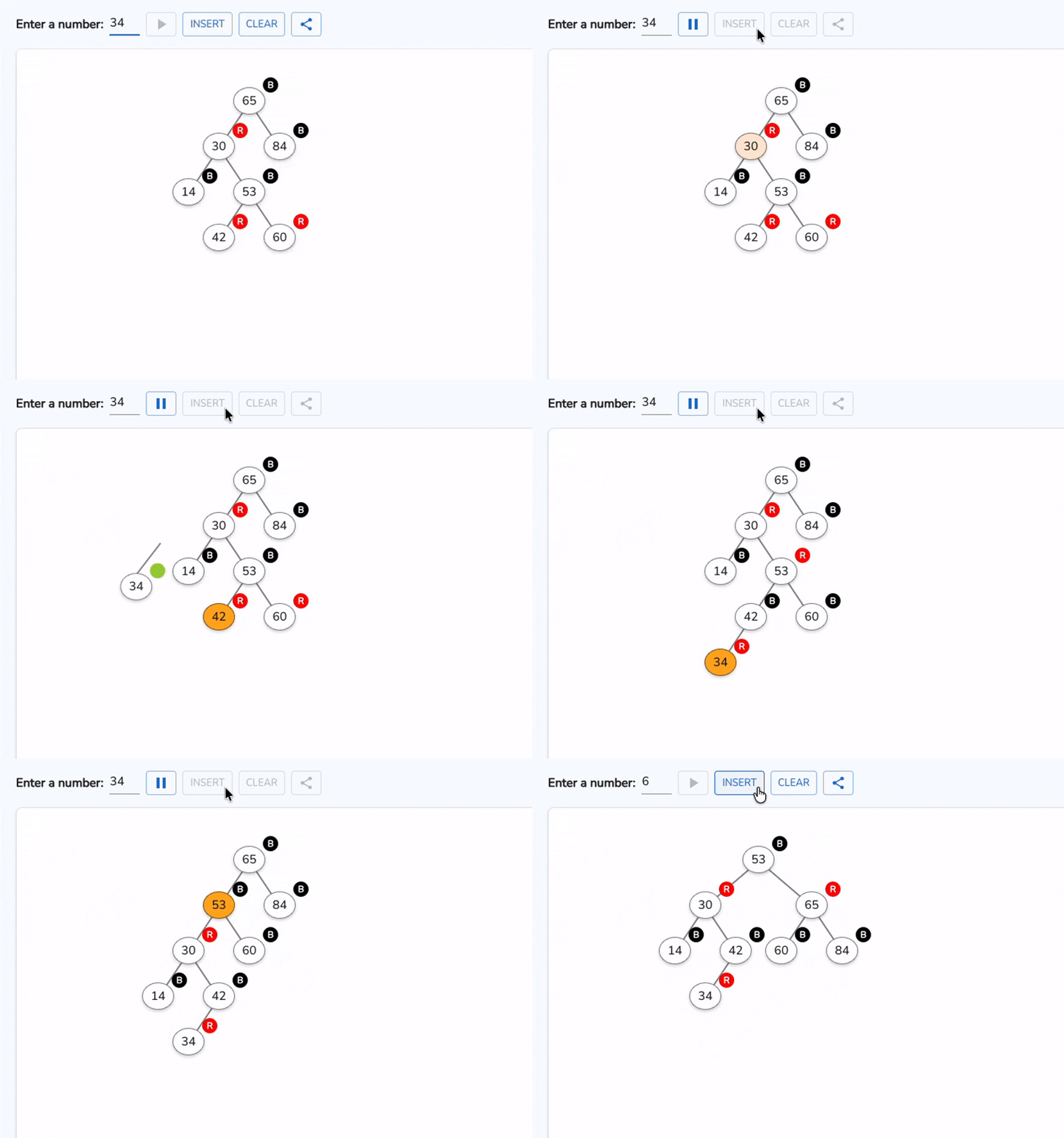
A Red-Black Tree relaxes the idea of perfect balance. Instead of tracking exact height differences, it colors each node red or black and enforces a set of coloring rules. These rules ensure that no path from root to leaf becomes excessively long.
However, the tree does not insist on minimal height — only reasonable balance. Because the constraints are softer, insertions and deletions typically require fewer rotations compared to AVL Trees. The structure accepts slight imbalance in exchange for smoother updates.
When Searches Dominate
If your system performs frequent lookups and relatively fewer structural updates, AVL Trees often feel sharper. Their stricter balance produces slightly shorter paths on average. Databases or in-memory indexing structures that emphasize retrieval may benefit from this rigidity.
When Updates Are Frequent
If insertions and deletions are constant, the Red-Black Tree usually behaves more gracefully. Because it tolerates small imbalances, restructuring is less aggressive. Many standard libraries prefer Red-Black Trees for this reason. They provide reliable balance without excessive rotation overhead.
Practical Insight
AVL Trees represent precision. Red-Black Trees represent resilience.
If you value tighter height guarantees and primarily read-heavy usage, AVL aligns with that mindset. If you value smoother structural updates and broad practicality, Red-Black is often preferred.
In the end, both protect the Binary Search Tree from chaos. They simply embody different philosophies of control. Understanding that difference is more important than memorizing rules.
Curious to Learn More?
Hand-picked resources to deepen your understanding


© 2025 See Algorithms. Code licensed under MIT, content under CC BY-NC 4.0.